05 - ether.fi - 2025
The Graveyard
Dead NFTs, earning six feet under.
- ~6%vault APY
- Non-custodialcustody
- No new primitiveapproach
- Web3platform
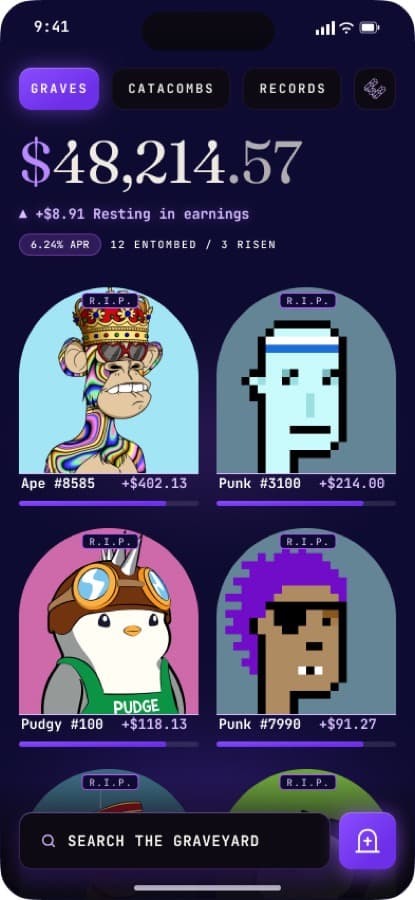
crypt, home
01
Overview
Why
Billions sit dead in illiquid NFTs. Bury one into a real yield vault and it earns while it waits to rise again.
Goal
Solve dead-NFT liquidity without a new primitive, by borrowing a trusted rail and making its value legible.
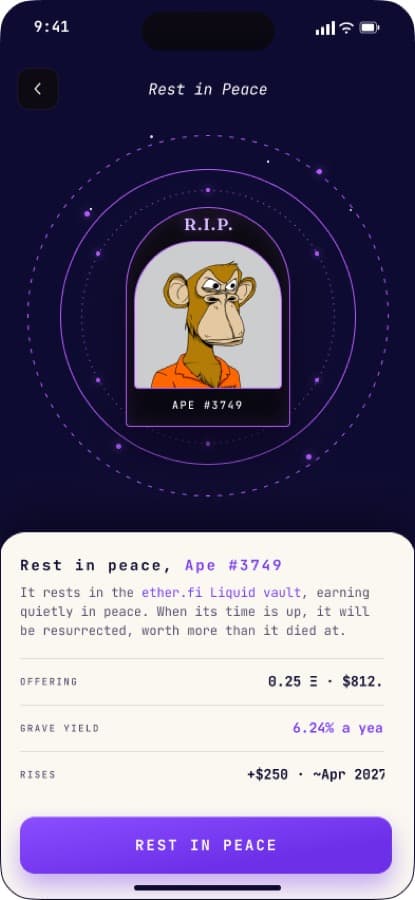
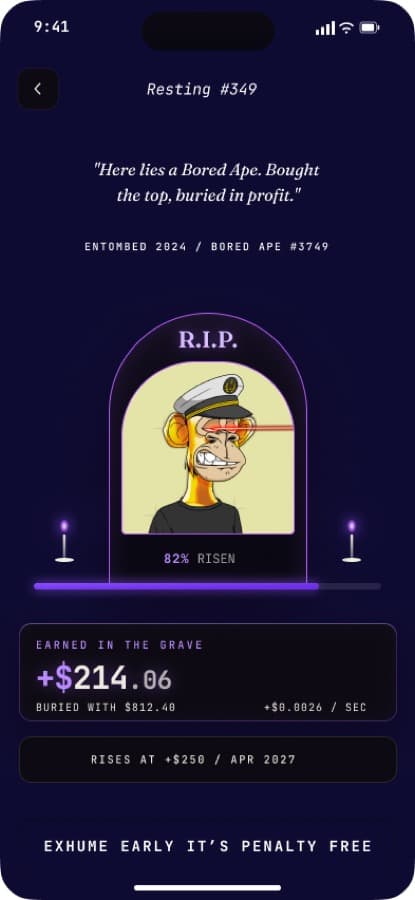
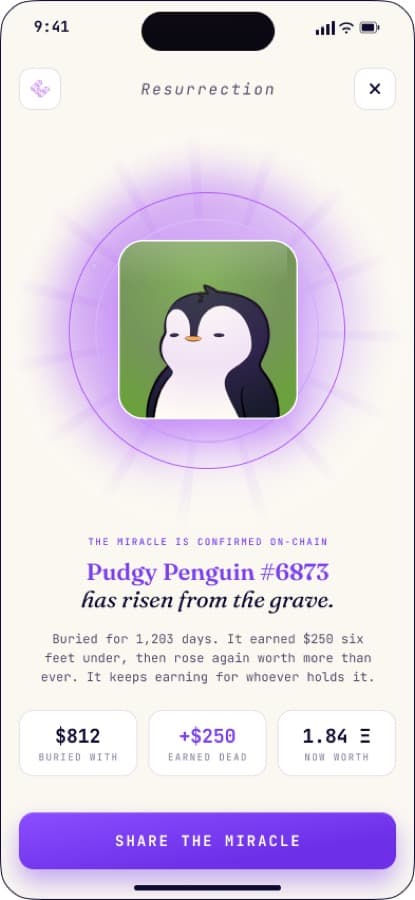
Billions of dollars sit dead in NFTs with no bids and no liquidity, assets nobody will buy, sitting in wallets doing nothing. The Graveyard gives them a job while they wait: bury a dead NFT into an ether.fi Liquid vault and it starts earning immediately, second by second, while a dead clock counts down to its resurrection. When the countdown ends, the NFT comes back out, worth more than when it died.
The move is to not invent a new primitive. The Graveyard sits directly on an existing ether.fi Liquid vault, earning its real, existing yield (~6% a year), non-custodial the entire time. The only new thing is the story wrapped around it: burying and resurrecting instead of depositing and withdrawing. Compounding, normally the least visible, least felt part of any yield product, becomes the hero, made visible as a literal countdown to resurrection.
The entire flow reduces to two words a person already understands without a glossary: Rest in Peace to bury an NFT, Resurrected to cash it back out. No vault jargon, no primitive to learn, no onboarding tutorial required. The macabre framing does double duty as both personality and explanation.
02
Selected screens

Synthesis
What it taught me
- 01
the best DeFi UX decision is often not inventing anything new: borrow a trusted rail and spend the design effort on making its value legible
- 02
playful, on-brand tone isn't a distraction from clarity; done right, it is the clarity. 'bury' and 'resurrect' explain the product faster than any tooltip could